
Restorative Dentistry Las Vegas
Repairing Smiles to Make Them Healthy & Strong
If your tooth has undergone a root canal or is being treated for extensive decay or other damage, you may need a crown, inlay, or onlay. A dental crown protects a compromised tooth from further problems by fitting snugly and permanently over the existing tooth structure. Sometimes, instead of using a crown, Dr. Hejazi can restore a tooth with a conservative inlay or onlay, which are best described as partial crowns. If you’re in need of smile repair, please don’t hesitate to call our team to schedule a restorative dentistry appointment with us at Advent Dental in Las Vegas.
Why Choose Advent Dental for Restorative Dentistry?
- In-Network with Most Union Insurance Plans
- Dentist with 30+ Years of Experience
- Bilingual Dental Office (English & Spanish)
Tooth-Colored Fillings
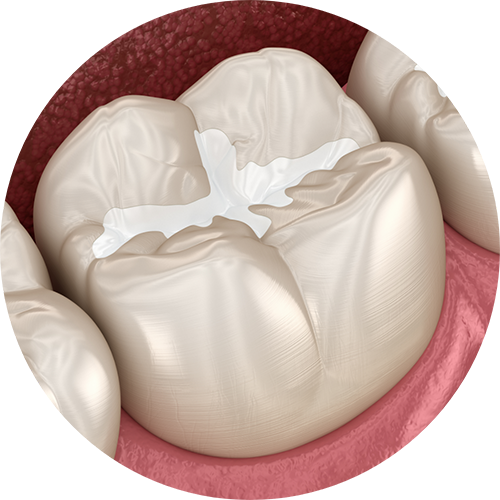
For patients who have suffered from cavities due to poor oral health, tooth-colored fillings are a simple yet effective solution that allows them to keep their teeth intact. Using a special, safe, and biocompatible material, as opposed to metal/silver materials of the past, we can carefully remove any decay from the tooth before filling it and strengthening its integrity, all while preserving as much healthy structure as possible.
Dental Crowns
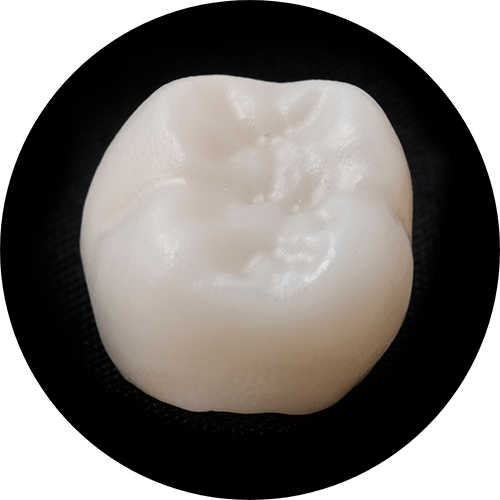
Dental crowns are designed to fit over an entire damaged or decayed tooth, and can be made with a variety of materials including porcelain, porcelain fused to metal (PFM), zirconia, and lithium. Dr. Hejazi will often recommend ceramic crowns because they are both natural-looking and very durable. After carefully examining your tooth, Dr. Hejazi can determine if a ceramic crown is the best material for your restoration. We will recommend that patients receive a dental crown in the following situations:
-
To repair a decayed or damaged tooth
-
To replace a lost or broken dental filling, inlay, or onlay
-
To protect a root canal-treated tooth
-
To enhance the smile as part of a cosmetic dentistry plan using all-ceramic crown
- To replace missing teeth as part of a fixed bridge restoration or when attached to a dental implant post
Learn More About Dental Crowns
Inlays & Onlays
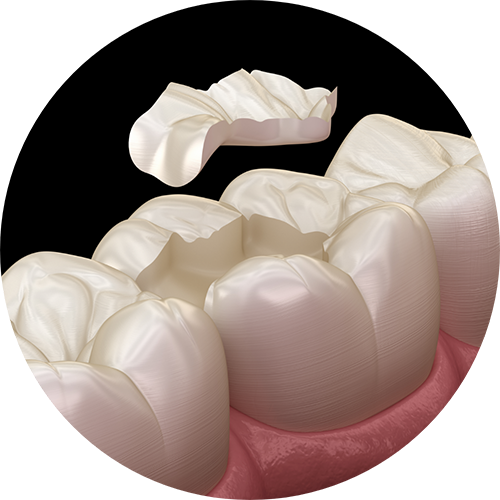
Inlays and onlays are conservative restorations we use when your tooth needs more than a filling but less than a full crown. What is the difference between an inlay and an onlay? An inlay fits between the cusps of your tooth (the raised portions of the biting surfaces of teeth), while an onlay fits over them. Very similar to crowns, but smaller, inlays and onlays are created from the same materials. Dr. Hejazi can tell you which one will best meet your needs after a full analysis of your mouth and bite.
Restorative Dentistry FAQs
Which Type of Dental Restoration Do I Need?
To determine what type of restoration you will need, we’ll carefully examine your smile and bite. We will always recommend the most conservative treatment option that will fully repair your damaged smile while maintaining the greatest amount of healthy tooth structure.
How Are Dental Crowns, Inlays, & Onlays Placed?
Regardless of which type of dental restoration we recommend, your treatment process will be completed over the course of two treatment visits. During the first, we will prepare your damaged tooth. Then, impressions/molds are captured to be used by our lab to craft your custom crown, inlay, or onlay. Next, a temporary restoration is placed to protect your prepared tooth or teeth. Once your final restoration is made, you’ll schedule a second visit with our team. During the follow-up appointment, we’ll simply remove your temporary and exchange it for a custom-crafted dental crown, inlay, or onlay.
How Do I Care for My Dental Restoration?
Your dental restoration will look and feel much like healthy, natural teeth and should be cared for just like your regular smile with twice-a-day tooth brushing, once daily flossing, and biannual dental appointments. We may recommend some changes to your oral hygiene products to avoid excessive wear to your dental restoration. You should use soft-bristle toothbrushes and minimally abrasive toothpaste. Patients may also want to switch to a waxed floss or water flosser to avoid tugging around the edges of the restoration.